먼저 답하면, ‘며칠 지났는지’보다 지금 피부 상태를 먼저 봐야 합니다
다만 모든 레이저에 공통으로 적용되는 하나의 대기 기간은 없습니다. 치료 목표, 파장, 펄스 폭, 조사 에너지, 냉각 방식, 피부색 변화의 정도와 회복 상태가 모두 다르기 때문입니다. 안전한 선택은 인터넷에서 본 날짜를 맞추는 것이 아니라, 현재 피부와 받을 시술을 의료진이 함께 확인한 뒤 진행·조정·연기 여부를 정하는 것입니다.
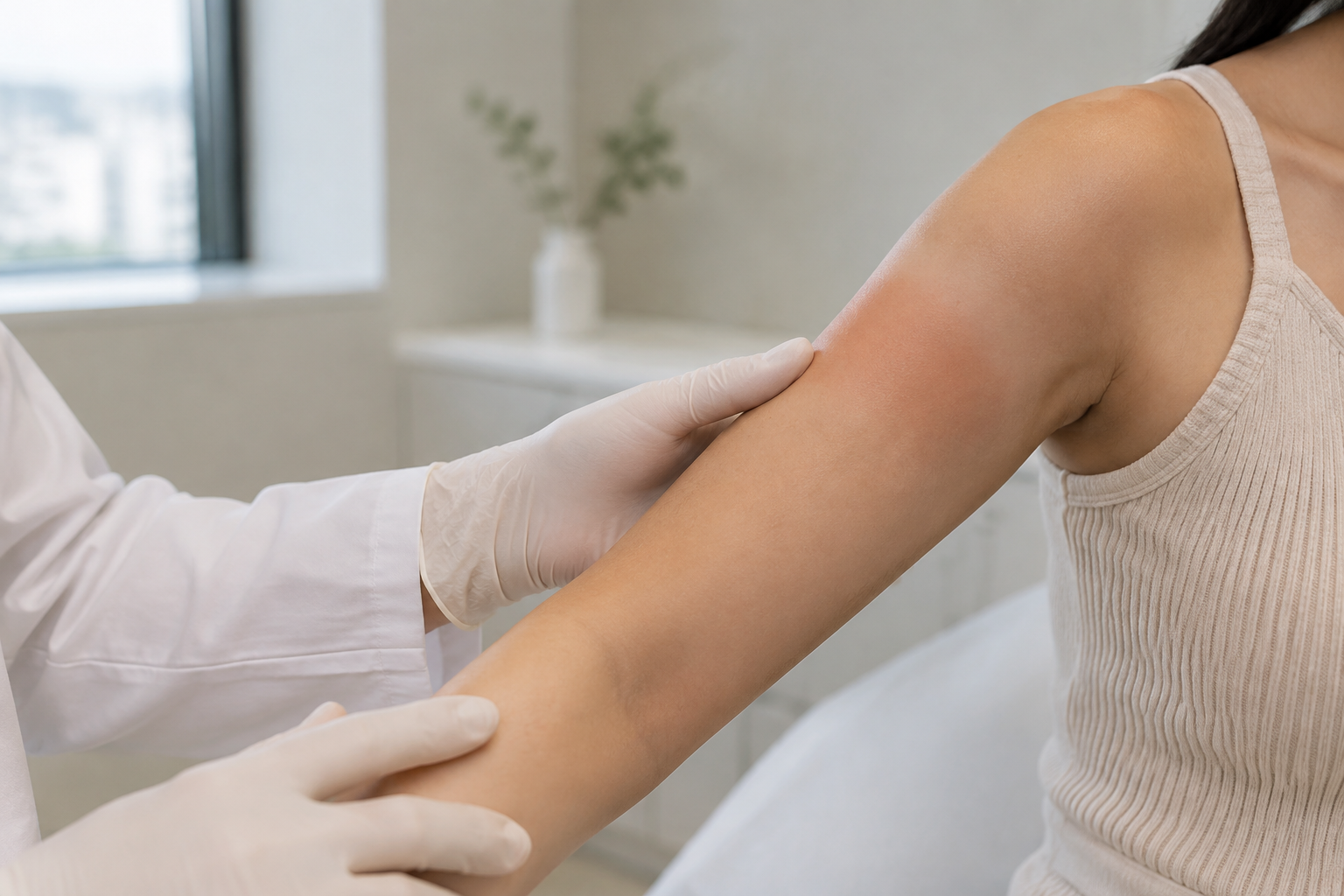
태닝한 피부에서 빛의 흡수 조건이 달라질 수 있습니다
레이저와 IPL은 특정 파장의 빛을 이용합니다. 색소나 털을 목표로 하는 시술에서는 멜라닌이 빛을 흡수하는 성질을 활용하지만, 피부 표면의 멜라닌도 일부 에너지를 흡수할 수 있습니다. 최근 태닝으로 표피의 색이 짙어지면 목표 조직과 주변 피부를 구분해 에너지를 전달하는 조건도 달라질 수 있습니다.
제모 레이저 900회 치료 기록을 분석한 연구에서는 원치 않는 피부 반응의 다수가 태닝한 피부 또는 피츠패트릭 피부형 III 이상에서 관찰됐습니다. 제모 목적의 IPL 무작위 대조시험에서도 피부색과 조사 에너지가 해당 조건의 피부 반응을 좌우하는 주요 변수였습니다. 이는 구형 제모 레이저와 특정 IPL 조건에서 확인된 사례이며, 모든 장비의 위험률이나 연기 기준으로 확대할 수는 없습니다. 최근 피부색 변화와 실제 사용할 장비의 설정을 함께 확인해야 한다는 참고 근거로 보는 것이 적절합니다.
일광화상은 단순히 ‘색이 진해진 상태’와 다릅니다
일광화상은 자외선으로 피부에 염증이 생긴 상태입니다. 밝은 피부에서는 붉게 보일 수 있고, 갈색이나 검은 피부에서는 색 변화가 뚜렷하지 않아도 열감, 통증, 부기, 가려움, 벗겨짐으로 나타날 수 있습니다.
14명의 지원자를 대상으로 한 펄스다이레이저 연구에서는 니코틴산 크림으로 인위적인 붉음을 만든 피부에서, 시술 전 색소와 붉음이 높을수록 색 변화와 피부결 이상 위험이 증가했습니다. 이는 일광화상 자체를 연구한 결과가 아니며 모든 레이저에 그대로 적용할 수도 없습니다. 다만 현재의 피부색과 붉음을 시술 전 평가에서 따로 확인해야 한다는 참고가 됩니다.
물집이 생겼다면 터뜨리지 말고, 고열·오한·메스꺼움, 고름 또는 심한 부기가 동반되면 레이저 일정 확인보다 먼저 진료를 받아야 합니다.
원래 피부톤이 어두운 것과 최근 태닝은 같은 정보가 아닙니다
원래 피부톤이 어둡다는 이유만으로 레이저 시술이 모두 불가능한 것은 아닙니다. 중요한 것은 평소 피부톤과 최근의 변화, 치료 목표, 사용할 파장과 설정, 냉각, 시술자의 경험을 함께 보는 것입니다.
반면 최근 태닝은 같은 사람 안에서 피부의 빛 흡수 조건이 달라졌다는 정보입니다. 평소 피부톤과 최근의 변화를 구분해 설명하고, 언제 어떤 방식으로 햇빛이나 태닝 기기에 노출됐는지 알리는 것이 안전한 계획에 더 도움이 됩니다.
셀프 태닝 제품도 미리 알려주세요
셀프 태닝 로션이나 스프레이는 자외선 태닝과 같은 과정은 아니지만 피부색을 일시적으로 바꿔 보이게 합니다. 미국피부과학회는 레이저 제모 준비 과정에서 셀프 태닝 제품을 사용하지 말도록 안내합니다.
예약을 앞두고 사용했다면 강하게 문지르거나 필링해 지우려 하지 말고, 제품명과 마지막 사용 시점을 병원에 알려주세요. 제거 방법과 시술 가능 시점은 받을 시술과 피부 자극 여부를 고려해 안내받는 편이 안전합니다.
상담 전에 여섯 가지를 정리해 주세요
- 햇볕을 오래 쬐거나 태닝한 날짜와 부위
- 평소와 비교한 피부색 변화와 경계
- 붉음·열감·통증·부기·물집·벗겨짐 여부
- 셀프 태닝 제품의 이름과 마지막 사용일
- 복용약·연고·화장품과 최근 변경 사항
- 시술 뒤 예정된 여행, 해변 활동, 야외 운동 또는 장시간 야외 이동
일부 약과 바르는 제품은 빛에 대한 피부 반응이나 자극 가능성에 영향을 줄 수 있습니다. 시술을 받기 위해 처방약을 임의로 끊거나 화장품을 급하게 추가하지 말고, 목록을 보여준 뒤 의료진의 지시를 따릅니다.
‘출력을 낮추면 괜찮다’고 단정할 수 없습니다
조사 에너지는 안전 계획의 한 요소지만 숫자 하나만 낮춘다고 모든 위험이 해결되는 것은 아닙니다. 파장, 펄스 폭, 스팟 크기, 조사 간격, 냉각, 목표 조직과 피부 상태를 함께 봐야 합니다.
의료진은 피부 상태와 기기 지침에 따라 시술을 미루거나 치료 범위를 바꿀 수 있습니다. 출력 조정 하나만으로 시술 가능 여부를 확정하지 않는 이유입니다.
예약일까지 할 일은 피부를 ‘빨리 되돌리는 것’이 아닙니다
추가 태닝을 피하고, 그늘·의복·모자와 함께 노출되는 피부에는 광범위 차단 기능이 있는 SPF 30 이상의 자외선 차단제를 사용하세요. 다만 이미 물집이 잡히거나 피부가 벗겨진 부위에는 임의의 제품을 덧바르기보다 의료진에게 먼저 묻는 편이 좋습니다.
태닝을 빨리 없애려고 스크럽, 필링, 고함량 산 성분이나 레티노이드를 새로 쓰면 피부 자극이 더해질 수 있습니다. 사진은 변화 기록에 도움이 되지만 조명과 카메라에 따라 피부색이 달라 보일 수 있으므로, 사진만으로 시술 가능 여부를 확정하지 않습니다.
결국 중요한 질문은 “며칠 지났나요?” 하나가 아니라 “평소 피부와 무엇이 달라졌고, 어떤 빛을 어떤 목적으로 사용할 예정인가요?”입니다. 일정을 미루는 결정도 안전한 진료 판단의 일부일 수 있습니다.
자주 묻는 질문
피부색이 거의 돌아온 것 같으면 말하지 않아도 되나요?
최근 태닝이나 강한 자외선 노출은 보이는 색만으로 판단하기 어려울 수 있습니다. 노출 시점과 당시 증상을 알려주면 의료진이 현재 상태와 시술 계획을 함께 판단하는 데 도움이 됩니다.
선크림을 발랐는데도 피부가 붉어졌습니다. 시술해도 되나요?
자외선 차단제 사용 여부보다 현재 붉음, 열감, 통증, 부기, 물집과 벗겨짐이 남아 있는지가 중요합니다. 예정대로 방문하기 전에 병원에 먼저 알리세요.
제모 레이저와 색소 레이저는 기준이 같은가요?
아닙니다. 목표 조직과 파장·설정이 다르므로 같은 기준을 일률적으로 적용하지 않습니다. 최근 태닝과 일광화상은 어느 쪽이든 상담에서 알려야 하지만, 실제 연기 기간과 재개 조건은 시술별로 달라집니다.
태닝한 부위만 피해서 다른 부위를 받을 수 있나요?
가능 여부는 시술 종류, 노출 범위, 전신 증상과 다른 부위의 피부 상태에 따라 달라집니다. 부위가 다르다는 이유만으로 스스로 진행을 확정하지 말고 의료진에게 확인하세요.
참고자료
- Anderson RR, Parrish JA. Selective photothermolysis. Science. 1983.
- Nanni CA, Alster TS. Laser-assisted hair removal: side effects. J Am Acad Dermatol. 1999.
- Thaysen-Petersen D, et al. Side effects from intense pulsed light. Lasers Surg Med. 2017.
- Haedersdal M, et al. Side effects from the pulsed dye laser. Acta Derm Venereol. 1998.
- American Academy of Dermatology. Laser hair removal: preparation.
- American Academy of Dermatology. How to treat a sunburn.
- American Academy of Dermatology. Sunburn signs that require medical attention.
- NHS. Sunburn: symptoms and when to seek urgent help.
이 글은 일반적인 건강 정보를 위한 것이며 개인의 진단이나 치료 계획을 대신하지 않습니다. 레이저·IPL 시술 가능 여부와 설정, 연기 또는 재개 시점은 현재 피부 상태, 복용약, 사용할 기기와 국내 허가사항을 확인한 의료진과 결정해야 합니다. 심한 통증, 넓은 물집, 고열·오한·메스꺼움, 고름 또는 심한 부기가 있으면 시술 일정보다 진료를 먼저 받으세요.
First, look at the current condition of the skin rather than only the number of days
There is no single waiting period that applies to every laser. The treatment goal, wavelength, pulse duration, fluence, cooling method, degree of color change, and stage of recovery all differ. The safer approach is not to match a date found online, but to have a clinician review your current skin and the planned procedure before deciding whether to proceed, adjust, or postpone it.
A tan can change how light is absorbed by the skin
Lasers and IPL use light at specific wavelengths. Treatments targeting pigment or hair rely on melanin absorbing light, but melanin in the epidermis can also absorb some of that energy. When recent tanning darkens the epidermis, the conditions for delivering energy selectively to the target while sparing surrounding skin may change.
An analysis of 900 laser hair-removal treatments found that many unwanted skin reactions occurred in tanned skin or Fitzpatrick skin type III or higher. A randomized trial of IPL hair removal also identified skin pigmentation and fluence as important determinants of skin reactions under the studied conditions. These findings came from older hair-removal lasers and specific IPL settings; they cannot be generalized into a risk rate or postponement rule for every device. They support checking recent color change together with the settings of the device that will actually be used.
Sunburn is not simply “darker skin”
Sunburn is inflammation caused by ultraviolet radiation. It may look red on lighter skin, while on brown or black skin the color change may be less obvious even when warmth, pain, swelling, itching, or peeling is present.
In a pulsed-dye laser study of 14 volunteers, redness induced with nicotinic acid cream was associated with a greater risk of color and texture changes when pretreatment pigmentation and redness were higher. This did not study sunburn itself and cannot be applied to every laser. It does, however, support assessing current pigmentation and redness separately before treatment.
Do not break blisters. If high fever, chills, nausea, pus, or severe swelling is present, seek medical care before focusing on the laser appointment.
Naturally darker skin and a recent tan are not the same information
Naturally darker skin does not mean that all laser procedures are impossible. Baseline skin tone, recent changes, the treatment target, wavelength and settings, cooling, and the clinician’s experience all matter.
A recent tan, by contrast, means that the light-absorption conditions have changed within the same person. Distinguish your usual skin tone from the recent change and explain when and how you were exposed to sunlight or a tanning device.
Tell the clinic about self-tanning products too
Self-tanning lotions and sprays do not work through the same process as UV tanning, but they temporarily alter how skin color appears. The American Academy of Dermatology advises avoiding self-tanning products when preparing for laser hair removal.
If you used one before an appointment, do not scrub or peel the skin aggressively to remove it. Tell the clinic the product name and the last date of use. The appropriate removal method and timing of treatment depend on the planned procedure and whether the skin has been irritated.
Prepare these six points before your consultation
- The date and area of prolonged sun exposure or tanning
- How the color and borders differ from your usual skin
- Any redness, warmth, pain, swelling, blisters, or peeling
- The name of any self-tanning product and when it was last used
- Medicines, topical products, skincare, and recent changes
- Travel, beach activities, outdoor exercise, or prolonged outdoor transit planned after treatment
Some medicines and topical products may affect light sensitivity or irritation. Do not stop prescribed medication or add skincare abruptly just to undergo a procedure. Bring a list and follow your clinician’s advice.
“Lowering the power” does not guarantee safety
Fluence is one part of the safety plan, but reducing a single number does not remove every risk. Wavelength, pulse duration, spot size, spacing, cooling, target tissue, and skin condition must be considered together.
Depending on the skin assessment and device instructions, a clinician may postpone treatment or change the treatment area. This is why a power adjustment alone cannot determine whether treatment is appropriate.
The goal before your appointment is not to “reverse” the skin quickly
Avoid further tanning. Use shade, clothing, and a hat, and apply a broad-spectrum sunscreen of SPF 30 or higher to exposed intact skin. If an area is blistered or peeling, ask a clinician before applying additional products.
New scrubs, peels, high-strength acids, or retinoids used to fade a tan quickly can add irritation. Photographs may help document change, but lighting and cameras can alter the apparent color; a photograph alone cannot determine whether treatment is suitable.
The important question is not only “How many days has it been?” but “What is different from your baseline skin, and what kind of light will be used for what purpose?” Postponing an appointment can be part of a safe clinical decision.
Frequently asked questions
My skin color looks almost normal again. Do I still need to mention it?
Yes. A recent tan or intense UV exposure may not be fully assessed by visible color alone. Sharing the timing and symptoms helps the clinician interpret your current skin and treatment plan together.
I used sunscreen but my skin still became red. Can I proceed?
What matters is not simply whether sunscreen was used, but whether redness, warmth, pain, swelling, blisters, or peeling remain. Contact the clinic before attending as planned.
Are the criteria the same for hair-removal and pigment lasers?
No. Their targets, wavelengths, and settings differ. Recent tanning and sunburn should be disclosed for either type, but postponement and restart criteria vary by procedure.
Can I treat another area and avoid the tanned area?
That depends on the procedure, extent of exposure, systemic symptoms, and the condition of the other area. Do not assume that a different site makes treatment appropriate; ask the clinician.
References
REFS
This article provides general health information and is not a substitute for an individual diagnosis or treatment plan. Whether and how to perform, postpone, or resume laser or IPL treatment should be decided with a clinician after reviewing the current skin, medicines, intended device, and applicable local authorization. Seek medical care before the procedure if you have severe pain, extensive blistering, high fever, chills, nausea, pus, or severe swelling.
まず「何日たったか」より、今の皮膚の状態を確認してください
すべてのレーザーに共通する一律の待機期間はありません。治療目的、波長、パルス幅、照射エネルギー、冷却方法、色調変化の程度、回復状態がそれぞれ異なるためです。ネットで見た日数に合わせるのではなく、現在の皮膚と予定する施術を医師が一緒に確認し、実施・調整・延期を判断することが安全につながります。
日焼けした皮膚では光の吸収条件が変わることがあります
レーザーとIPLは特定波長の光を利用します。色素や毛を標的とする施術ではメラニンが光を吸収する性質を使いますが、表皮のメラニンもエネルギーの一部を吸収します。最近の日焼けで表皮が濃くなると、周囲の皮膚を守りながら標的へ選択的にエネルギーを届ける条件が変わる可能性があります。
レーザー脱毛900回分の記録を解析した研究では、望ましくない皮膚反応の多くが、日焼けした皮膚またはフィッツパトリック分類III以上でみられました。脱毛用IPLの無作為化試験でも、皮膚の色素量と照射エネルギーが、その条件下の皮膚反応を左右する主な因子でした。ただし、これらは旧型の脱毛レーザーや特定のIPL条件で得られた結果で、すべての機器の危険率や延期基準には一般化できません。最近の色調変化と実際に使用する機器の設定を併せて確認する根拠として理解するのが適切です。
日光皮膚炎は、単に「肌が濃くなった状態」ではありません
日光皮膚炎は紫外線による皮膚の炎症です。明るい肌では赤く見えることが多い一方、褐色・黒色の肌では色の変化が目立たなくても、熱感、痛み、腫れ、かゆみ、皮むけとして現れることがあります。
14人を対象にした色素レーザーの研究では、ニコチン酸クリームで人工的に赤みを作った皮膚で、施術前の色素量と赤みが強いほど色調変化や質感異常のリスクが高まりました。これは日光皮膚炎そのものを調べた研究ではなく、すべてのレーザーに当てはめることもできませんが、施術前に現在の色調と赤みを分けて評価する必要性を示す参考になります。
水疱はつぶさないでください。高熱、悪寒、吐き気、膿、強い腫れを伴う場合は、レーザーの日程確認より先に診察を受けてください。
生まれつきの肌色と最近の日焼けは同じ情報ではありません
もともと肌色が濃いからといって、すべてのレーザー施術が不可能というわけではありません。普段の肌色と最近の変化、治療目標、使用する波長・設定、冷却、施術者の経験を総合して判断します。
一方、最近の日焼けは、同じ人の中で光吸収の条件が変わったという情報です。普段の肌色と最近の変化を区別し、いつ、どのように日光や日焼け機器に曝露したかを伝えることが安全な計画に役立ちます。
セルフタンニング製品も事前に伝えてください
セルフタンニングのローションやスプレーは紫外線による日焼けとは仕組みが異なりますが、肌色の見え方を一時的に変えます。米国皮膚科学会は、レーザー脱毛前にセルフタンニング製品を使わないよう案内しています。
予約前に使った場合、強くこすったりピーリングで落とそうとせず、製品名と最終使用日を医療機関へ伝えてください。落とし方や施術可能な時期は、予定する施術と皮膚刺激の有無を踏まえて案内を受けるのが安全です。
カウンセリング前に6点を整理しましょう
- 長時間日光を浴びた、または日焼けした日と部位
- 普段と比べた色調変化とその境界
- 赤み・熱感・痛み・腫れ・水疱・皮むけの有無
- セルフタンニング製品名と最終使用日
- 内服薬・外用薬・化粧品と最近の変更
- 施術後に予定している旅行、海辺の活動、屋外運動、長時間の屋外移動
薬や外用製品の一部は光への反応や刺激の可能性に影響します。施術を受けるために処方薬を自己判断で中止したり、化粧品を急に追加したりせず、一覧を見せて医師の指示に従ってください。
「出力を下げれば大丈夫」とは断定できません
照射エネルギーは安全計画の一要素ですが、数値を一つ下げるだけですべてのリスクが解消するわけではありません。波長、パルス幅、スポット径、照射間隔、冷却、標的組織、皮膚状態を併せて考えます。
医師は皮膚状態と機器の指示に基づき、施術を延期したり治療範囲を変えたりすることがあります。出力調整だけで施術可否を決められない理由です。
予約日までに行うことは、肌を「早く元に戻す」ことではありません
追加の日焼けを避け、日陰、衣服、帽子を利用し、露出する健常な皮膚には広範囲防御のSPF30以上の日焼け止めを使ってください。水疱や皮むけのある部位には、自己判断で製品を重ねる前に医師へ相談してください。
日焼けを早く薄くしようとスクラブ、ピーリング、高濃度の酸、レチノイドを新しく使うと刺激が加わることがあります。写真は変化の記録に役立ちますが、照明やカメラで色の見え方が変わるため、写真だけで施術可否を決めることはできません。
大切な質問は「何日たったか」だけでなく、「普段の肌と何が違い、どの光を何の目的で使うのか」です。日程を延期することも、安全な診療判断の一部です。
よくある質問
肌色がほぼ戻ったように見えれば、伝えなくてもよいですか?
最近の日焼けや強い紫外線曝露は、見た目の色だけでは十分に判断できないことがあります。曝露時期と当時の症状を伝えると、現在の皮膚と施術計画を一緒に判断する助けになります。
日焼け止めを塗ったのに赤くなりました。施術できますか?
日焼け止めを使ったかどうかより、赤み、熱感、痛み、腫れ、水疱、皮むけが現在も残っているかが重要です。予定どおり来院する前に医療機関へ連絡してください。
脱毛レーザーと色素レーザーの基準は同じですか?
同じではありません。標的組織、波長、設定が異なるため、一律の基準は適用できません。最近の日焼けと日光皮膚炎はいずれの場合も伝える必要がありますが、延期期間や再開条件は施術ごとに異なります。
日焼けした部位を避けて、別の部位を施術できますか?
施術の種類、曝露範囲、全身症状、別部位の皮膚状態によって異なります。部位が違うだけで実施可能と自己判断せず、医師へ確認してください。
参考資料
REFS
この記事は一般的な健康情報を提供するもので、個別の診断や治療計画に代わるものではありません。レーザー・IPLの実施、設定、延期・再開時期は、現在の皮膚、服用薬、使用予定機器および地域の承認事項を確認した医師と決定してください。強い痛み、広範囲の水疱、高熱、悪寒、吐き気、膿、強い腫れがある場合は、施術日程より先に診察を受けてください。
先看现在的皮肤状态,而不只是“过了几天”
并不存在适用于所有激光的一套统一等待期。治疗目标、波长、脉宽、能量、冷却方式、肤色变化程度和恢复状态都不相同。更安全的做法不是套用网上看到的天数,而是由医生结合目前皮肤情况和计划进行的治疗,决定继续、调整还是延期。
晒黑后的皮肤可能改变对光能的吸收条件
激光和IPL使用特定波长的光。针对色素或毛发的治疗利用黑色素吸收光能的特性,但表皮黑色素也会吸收一部分能量。近期晒黑使表皮颜色加深后,在保护周围皮肤的同时将能量选择性传递到目标组织的条件可能发生变化。
一项分析900次激光脱毛治疗记录的研究发现,多数不良皮肤反应出现在晒黑皮肤或Fitzpatrick III型及以上皮肤。另一项脱毛IPL随机试验也显示,在其研究条件下,肤色和能量是影响皮肤反应的重要变量。这些结果来自较早期的脱毛激光和特定IPL条件,不能推及所有设备的风险率或延期标准;更适合作为需要同时核对近期肤色变化和实际设备设置的参考依据。
晒伤不只是“皮肤颜色变深”
晒伤是紫外线引起的皮肤炎症。浅色皮肤可能明显发红,而棕色或黑色皮肤即使颜色变化不明显,也可能出现发热、疼痛、肿胀、瘙痒或脱皮。
一项针对14名志愿者的脉冲染料激光研究,在用烟酸乳膏人为诱发泛红的皮肤中发现,治疗前色素和红斑越明显,发生色素或皮肤纹理改变的风险越高。该研究并非直接研究晒伤,也不能适用于所有激光,但可作为治疗前应分别评估当前肤色和泛红程度的参考。
出现水疱时不要挑破。若伴有高热、寒战、恶心、脓液或严重肿胀,应先就医,而不是先处理激光预约。
天生肤色较深与近期晒黑并不是同一信息
天生肤色较深并不意味着所有激光治疗都不能进行。需要综合评估平时肤色、近期变化、治疗目标、波长和设置、冷却方式及操作者经验。
近期晒黑则表示同一个人的光吸收条件发生了变化。请区分平时肤色与近期变化,并说明何时、以何种方式接触了阳光或美黑设备。
也请提前告知是否使用过免晒美黑产品
免晒美黑乳液或喷雾与紫外线晒黑机制不同,但会暂时改变皮肤颜色外观。美国皮肤科学会建议,准备接受激光脱毛时不要使用免晒美黑产品。
若预约前使用过,请勿用力摩擦或去角质来清除,应告知产品名称及最后使用时间。如何去除以及何时可以治疗,需要结合计划治疗和皮肤是否受到刺激来判断。
咨询前请整理以下六点
- 长时间日晒或美黑的日期与部位
- 与平时相比的肤色变化及边界
- 是否有泛红、发热、疼痛、肿胀、水疱或脱皮
- 免晒美黑产品名称和最后使用日期
- 正在使用的药物、外用药、护肤品及近期变化
- 治疗后计划的旅行、海边活动、户外运动或长时间户外通勤
部分药物和外用产品会影响皮肤对光的反应或刺激风险。不要为了接受治疗而自行停用处方药,也不要临时增加护肤品;请带上清单并遵医嘱。
不能断定“把能量调低就安全”
能量是安全方案的一部分,但仅调低一个数值并不能消除所有风险。还要综合波长、脉宽、光斑大小、照射间隔、冷却、目标组织和皮肤状态。
医生可能根据皮肤状态和设备说明延期治疗或调整治疗范围。因此,不能只凭降低能量来决定能否治疗。
预约前要做的不是让皮肤“快速恢复原样”
避免继续晒黑,利用阴凉处、衣物和帽子防晒,并在暴露且皮肤完整的部位使用广谱SPF30及以上防晒霜。已经起疱或脱皮的部位,在自行添加产品前请先咨询医生。
为了快速淡化晒黑而新用磨砂、换肤、高浓度酸类或维A类产品,可能进一步刺激皮肤。照片可帮助记录变化,但光线和相机会改变颜色呈现,不能只凭照片判断是否适合治疗。
关键问题不只是“过了几天”,而是“与平时皮肤相比发生了什么变化,将用哪种光、达到什么目的”。延期也可能是安全诊疗判断的一部分。
常见问题
肤色看起来几乎恢复了,还需要说吗?
需要。近期晒黑或强烈紫外线暴露有时不能只凭可见颜色判断。说明暴露时间和当时症状,有助于医生结合当前皮肤和治疗计划作出判断。
用了防晒霜还是发红,可以治疗吗?
关键不只是是否使用防晒霜,而是目前是否仍有泛红、发热、疼痛、肿胀、水疱或脱皮。请在按计划到院前先联系医疗机构。
激光脱毛和色素激光的标准一样吗?
不一样。目标组织、波长和设置不同,不能套用统一标准。无论哪种治疗都应告知近期晒黑和晒伤,但延期与恢复条件因治疗而异。
避开晒黑部位,治疗其他部位可以吗?
这取决于治疗类型、暴露范围、全身症状以及其他部位的皮肤状态。不要因为部位不同就自行决定,请让医生确认。
参考资料
REFS
本文仅提供一般健康信息,不能替代个人诊断或治疗方案。激光或IPL能否进行、如何设置、是否延期以及何时恢复,应由医生结合当前皮肤、用药、计划使用的设备及当地许可信息共同决定。如有剧烈疼痛、大面积水疱、高热、寒战、恶心、脓液或严重肿胀,应先就医。
Commencez par l’état actuel de la peau, pas seulement par le nombre de jours
Il n’existe pas de délai unique valable pour tous les lasers. L’objectif, la longueur d’onde, la durée d’impulsion, la fluence, le refroidissement, l’importance du changement de couleur et le stade de récupération diffèrent. La démarche la plus sûre n’est pas d’appliquer un délai trouvé en ligne, mais de faire évaluer la peau actuelle et le soin prévu par un médecin, qui décidera de maintenir, adapter ou reporter la séance.
Le bronzage peut modifier les conditions d’absorption de la lumière
Les lasers et l’IPL utilisent des longueurs d’onde précises. Les traitements ciblant les pigments ou les poils exploitent l’absorption de la lumière par la mélanine, mais la mélanine de l’épiderme absorbe elle aussi une partie de l’énergie. Lorsque le bronzage récent assombrit l’épiderme, les conditions permettant de délivrer l’énergie à la cible tout en préservant la peau voisine peuvent changer.
Une analyse de 900 séances d’épilation laser a observé de nombreuses réactions indésirables sur une peau bronzée ou de phototype III ou supérieur. Un essai randomisé d’épilation par IPL a également identifié la pigmentation et la fluence comme variables importantes dans les conditions étudiées. Ces résultats proviennent d’anciens lasers d’épilation et de paramètres IPL particuliers ; ils ne définissent ni un taux de risque ni un délai universel. Ils étayent surtout la nécessité de vérifier le changement récent de couleur avec les réglages de l’appareil réellement utilisé.
Un coup de soleil n’est pas simplement une peau plus foncée
Le coup de soleil est une inflammation due aux ultraviolets. Il paraît souvent rouge sur une peau claire ; sur une peau brune ou noire, la couleur peut moins changer alors que chaleur, douleur, gonflement, démangeaisons ou desquamation sont présents.
Dans une étude sur le laser à colorant pulsé menée chez 14 volontaires, une rougeur provoquée par une crème à l’acide nicotinique était associée à davantage de modifications de couleur ou de texture lorsque pigmentation et rougeur initiales étaient plus élevées. Cette étude ne portait pas directement sur le coup de soleil et ne s’applique pas à tous les lasers. Elle rappelle néanmoins l’intérêt d’évaluer séparément la pigmentation et la rougeur avant la séance.
Ne percez pas les cloques. En cas de forte fièvre, frissons, nausées, pus ou gonflement important, consultez avant de vous préoccuper du rendez-vous laser.
Une peau naturellement foncée et un bronzage récent ne sont pas la même information
Une peau naturellement foncée ne rend pas tous les traitements laser impossibles. Il faut considérer le phototype habituel, les changements récents, la cible, la longueur d’onde et les paramètres, le refroidissement et l’expérience du praticien.
Un bronzage récent indique en revanche que les conditions d’absorption ont changé chez une même personne. Distinguez votre couleur habituelle du changement récent et précisez quand et comment vous avez été exposé au soleil ou à un appareil de bronzage.
Signalez également les autobronzants
Les lotions et sprays autobronzants n’agissent pas comme les UV, mais modifient temporairement l’apparence de la couleur cutanée. L’American Academy of Dermatology conseille de les éviter avant une épilation laser.
Si vous en avez utilisé avant le rendez-vous, n’essayez pas de les retirer par frottement énergique ou peeling. Donnez le nom du produit et la date de dernière utilisation. La méthode d’élimination et le moment approprié dépendent du soin prévu et d’une éventuelle irritation.
Préparez six informations avant la consultation
- Date et zone d’exposition solaire prolongée ou de bronzage
- Différence de couleur et limites par rapport à votre peau habituelle
- Rougeur, chaleur, douleur, gonflement, cloques ou desquamation
- Nom de l’autobronzant et date de dernière utilisation
- Médicaments, traitements locaux, cosmétiques et changements récents
- Voyage, plage, sport extérieur ou long déplacement dehors prévu après la séance
Certains médicaments et produits locaux peuvent modifier la réaction à la lumière ou le risque d’irritation. N’arrêtez pas un traitement prescrit et n’ajoutez pas brusquement des cosmétiques pour pouvoir réaliser la séance. Présentez la liste et suivez l’avis du médecin.
« Baisser la puissance » ne garantit pas la sécurité
La fluence n’est qu’un élément du plan de sécurité. Diminuer un chiffre ne supprime pas tous les risques : longueur d’onde, durée d’impulsion, taille du spot, espacement, refroidissement, tissu ciblé et état cutané doivent être évalués ensemble.
Selon l’examen de la peau et les instructions de l’appareil, le médecin peut reporter la séance ou modifier la zone traitée. Un simple ajustement d’énergie ne suffit donc pas à décider si le soin est approprié.
Avant le rendez-vous, le but n’est pas de faire disparaître rapidement le bronzage
Évitez toute exposition supplémentaire. Utilisez l’ombre, des vêtements et un chapeau, et appliquez un écran solaire à large spectre SPF 30 ou plus sur la peau exposée intacte. En présence de cloques ou de desquamation, demandez conseil avant d’ajouter un produit.
Un nouveau gommage, peeling, acide fortement dosé ou rétinoïde utilisé pour éclaircir rapidement le bronzage peut accentuer l’irritation. Les photos aident à suivre l’évolution, mais l’éclairage et l’appareil peuvent modifier la couleur apparente ; elles ne suffisent pas à autoriser un soin.
La bonne question n’est pas seulement « Combien de jours se sont écoulés ? », mais « Qu’est-ce qui a changé par rapport à ma peau habituelle, et quelle lumière sera utilisée dans quel but ? ». Reporter la séance peut faire partie d’une décision médicale prudente.
Questions fréquentes
Ma peau semble avoir presque retrouvé sa couleur. Dois-je quand même le signaler ?
Oui. Un bronzage récent ou une forte exposition aux UV ne se juge pas toujours à la couleur visible. Indiquer le moment de l’exposition et les symptômes aide le médecin à rapprocher l’état actuel et le projet de soin.
J’avais mis de la crème solaire, mais ma peau a rougi. Puis-je faire la séance ?
L’essentiel n’est pas seulement d’avoir utilisé une protection solaire, mais de savoir s’il reste rougeur, chaleur, douleur, gonflement, cloques ou desquamation. Contactez la clinique avant de venir comme prévu.
Les critères sont-ils les mêmes pour l’épilation laser et les lasers pigmentaires ?
Non. Les cibles, longueurs d’onde et paramètres diffèrent. Un bronzage récent ou un coup de soleil doit être signalé dans les deux cas, mais le délai et les conditions de reprise varient selon le soin.
Peut-on traiter une autre zone en évitant la partie bronzée ?
Cela dépend du traitement, de l’étendue de l’exposition, des symptômes généraux et de l’état de l’autre zone. Ne concluez pas vous-même qu’une zone différente peut être traitée ; demandez au médecin.
Références
REFS
Cet article fournit des informations générales de santé et ne remplace pas un diagnostic ni un plan de traitement individuel. La réalisation, les réglages, le report ou la reprise d’un laser ou d’une IPL doivent être décidés avec un médecin après examen de la peau, des médicaments, de l’appareil prévu et des autorisations locales. En cas de douleur intense, cloques étendues, forte fièvre, frissons, nausées, pus ou gonflement important, consultez avant la séance.
Primero valore el estado actual de la piel, no solo los días transcurridos
No existe un único periodo de espera válido para todos los láseres. Cambian el objetivo, la longitud de onda, la duración del pulso, la fluencia, la refrigeración, el grado de cambio de color y la recuperación. Lo más seguro no es aplicar una fecha encontrada en internet, sino que un profesional valore la piel actual y el procedimiento previsto para decidir si se mantiene, se ajusta o se pospone.
El bronceado puede cambiar las condiciones de absorción de la luz
Los láseres y la IPL utilizan longitudes de onda específicas. Los tratamientos dirigidos al pigmento o al pelo aprovechan la absorción de luz por la melanina, pero la melanina de la epidermis también puede absorber parte de la energía. Cuando un bronceado reciente oscurece la epidermis, pueden cambiar las condiciones para entregar energía a la diana protegiendo la piel circundante.
Un análisis de 900 tratamientos de depilación láser observó muchas reacciones cutáneas no deseadas en piel bronceada o de fototipo III o superior. Un ensayo aleatorizado de depilación con IPL también identificó la pigmentación y la fluencia como variables importantes en las condiciones estudiadas. Son datos de láseres de depilación antiguos y de parámetros IPL concretos, por lo que no definen el riesgo ni el aplazamiento para todos los equipos. Sirven como fundamento para revisar el cambio reciente de color junto con la configuración del dispositivo que se utilizará.
Una quemadura solar no es simplemente “piel más oscura”
La quemadura solar es una inflamación causada por la radiación ultravioleta. Puede verse roja en piel clara; en piel morena o negra el cambio de color puede ser menos evidente aunque haya calor, dolor, hinchazón, picor o descamación.
En un estudio con láser de colorante pulsado en 14 voluntarios, la piel enrojecida de forma artificial con crema de ácido nicotínico presentó mayor riesgo de cambios de color y textura cuando la pigmentación y el enrojecimiento previos eran más altos. No fue un estudio de quemadura solar y no puede aplicarse a todos los láseres, pero apoya valorar por separado la pigmentación y el enrojecimiento actuales antes del tratamiento.
No reviente las ampollas. Si hay fiebre alta, escalofríos, náuseas, pus o hinchazón intensa, busque atención médica antes de ocuparse de la cita del láser.
Una piel naturalmente oscura y un bronceado reciente no son lo mismo
Tener la piel naturalmente oscura no significa que todos los procedimientos láser sean imposibles. Se valoran el tono habitual, los cambios recientes, el objetivo, la longitud de onda y los parámetros, la refrigeración y la experiencia del profesional.
Un bronceado reciente, en cambio, indica que las condiciones de absorción han cambiado en la misma persona. Distinga el tono habitual del cambio reciente y explique cuándo y cómo estuvo expuesto al sol o a un dispositivo de bronceado.
Informe también sobre los autobronceadores
Las lociones y los aerosoles autobronceadores no funcionan como el bronceado por UV, pero cambian temporalmente el aspecto del color de la piel. La American Academy of Dermatology aconseja evitarlos al prepararse para una depilación láser.
Si utilizó uno antes de la cita, no intente retirarlo frotando con fuerza ni mediante un peeling. Indique el nombre del producto y la fecha del último uso. La forma de retirarlo y el momento adecuado para tratar dependen del procedimiento y de si la piel está irritada.
Prepare estos seis datos antes de la consulta
- Fecha y zona de exposición solar prolongada o bronceado
- Cambio de color y límites respecto al tono habitual
- Enrojecimiento, calor, dolor, hinchazón, ampollas o descamación
- Nombre del autobronceador y fecha del último uso
- Medicamentos, productos tópicos, cosméticos y cambios recientes
- Viajes, playa, ejercicio al aire libre o desplazamientos prolongados en el exterior previstos después
Algunos medicamentos y productos tópicos pueden influir en la respuesta a la luz o en la irritación. No suspenda una medicación prescrita ni añada cosméticos de forma brusca para poder tratarse. Lleve una lista y siga las indicaciones del profesional.
“Bajar la potencia” no garantiza que sea seguro
La fluencia es solo una parte del plan de seguridad. Reducir un número no elimina todos los riesgos: hay que considerar juntos la longitud de onda, la duración del pulso, el tamaño del punto, el espaciado, la refrigeración, el tejido diana y el estado de la piel.
Según la valoración cutánea y las instrucciones del equipo, el profesional puede posponer el tratamiento o modificar el área. Por eso un ajuste de energía por sí solo no determina si el procedimiento es adecuado.
Antes de la cita, el objetivo no es “revertir” rápidamente la piel
Evite broncearse más. Utilice sombra, ropa y sombrero, y aplique un protector de amplio espectro SPF 30 o superior sobre la piel expuesta que esté intacta. Si hay ampollas o descamación, consulte antes de añadir productos.
Empezar a usar exfoliantes, peelings, ácidos de alta concentración o retinoides para aclarar rápido el bronceado puede aumentar la irritación. Las fotografías ayudan a documentar cambios, pero la iluminación y la cámara alteran el color aparente; una foto no basta para decidir si se puede tratar.
La pregunta importante no es solo “¿cuántos días han pasado?”, sino “¿qué ha cambiado respecto a mi piel habitual y qué luz se utilizará, con qué objetivo?”. Aplazar una cita también puede formar parte de una decisión clínica segura.
Preguntas frecuentes
La piel parece haber recuperado casi su color. ¿Aun así debo decirlo?
Sí. Un bronceado reciente o una exposición UV intensa no siempre se valora solo por el color visible. Comunicar cuándo ocurrió y qué síntomas hubo ayuda a interpretar la piel actual junto con el plan.
Utilicé protector solar, pero la piel se enrojeció. ¿Puedo tratarme?
Importa más si siguen presentes enrojecimiento, calor, dolor, hinchazón, ampollas o descamación que el hecho de haber usado protector. Contacte con la clínica antes de acudir según lo previsto.
¿Los criterios son iguales para depilación láser y láser pigmentario?
No. Cambian las dianas, las longitudes de onda y los parámetros. En ambos casos debe informarse del bronceado o la quemadura recientes, pero los plazos y criterios de reanudación dependen del procedimiento.
¿Puedo tratar otra zona evitando la parte bronceada?
Depende del procedimiento, la extensión de la exposición, los síntomas generales y el estado de la otra zona. No dé por hecho que una localización diferente permite tratar; pregunte al profesional.
Referencias
REFS
Este artículo ofrece información general de salud y no sustituye un diagnóstico ni un plan de tratamiento individual. La realización, los parámetros, el aplazamiento o la reanudación de un láser o una IPL deben decidirse con un profesional tras revisar la piel actual, los medicamentos, el dispositivo previsto y la autorización local aplicable. Si hay dolor intenso, ampollas extensas, fiebre alta, escalofríos, náuseas, pus o hinchazón intensa, busque atención médica antes de la cita.
- Anderson RR, Parrish JA. Selective photothermolysis. Science. 1983.
- Nanni CA, Alster TS. Laser-assisted hair removal: side effects. J Am Acad Dermatol. 1999.
- Thaysen-Petersen D, et al. Side effects from intense pulsed light. Lasers Surg Med. 2017.
- Haedersdal M, et al. Side effects from the pulsed dye laser. Acta Derm Venereol. 1998.
- American Academy of Dermatology. Laser hair removal: preparation.
- American Academy of Dermatology. How to treat a sunburn.
- American Academy of Dermatology. Sunburn signs that require medical attention.
- NHS. Sunburn: symptoms and when to seek urgent help.