눈을 감는 것만으로 충분하지 않을 수 있습니다
눈가는 색소, 잔주름, 탄력 등 다양한 고민으로 시술을 고려하는 부위입니다. 동시에 안구와 매우 가깝기 때문에 치료 범위와 눈 보호 방법을 먼저 확인해야 합니다. 특히 빛이나 레이저를 사용하는 시술에서는 단순히 눈을 감는 것만으로 안구를 완전히 보호할 수 있다고 생각해서는 안 됩니다.
레이저가 눈에 미치는 영향은 파장과 에너지, 노출 시간, 거리 등에 따라 달라집니다. 따라서 사용 장비의 파장에 맞는 보호구가 필요하며, 치료 위치에 따라 의료진이 적절한 보안경이나 눈 보호 장치를 선택해야 합니다. 보호구가 치료에 방해된다는 이유로 환자가 임의로 벗어서는 안 됩니다.
아이써마지에서는 왜 아이쉴드를 착용하나요?
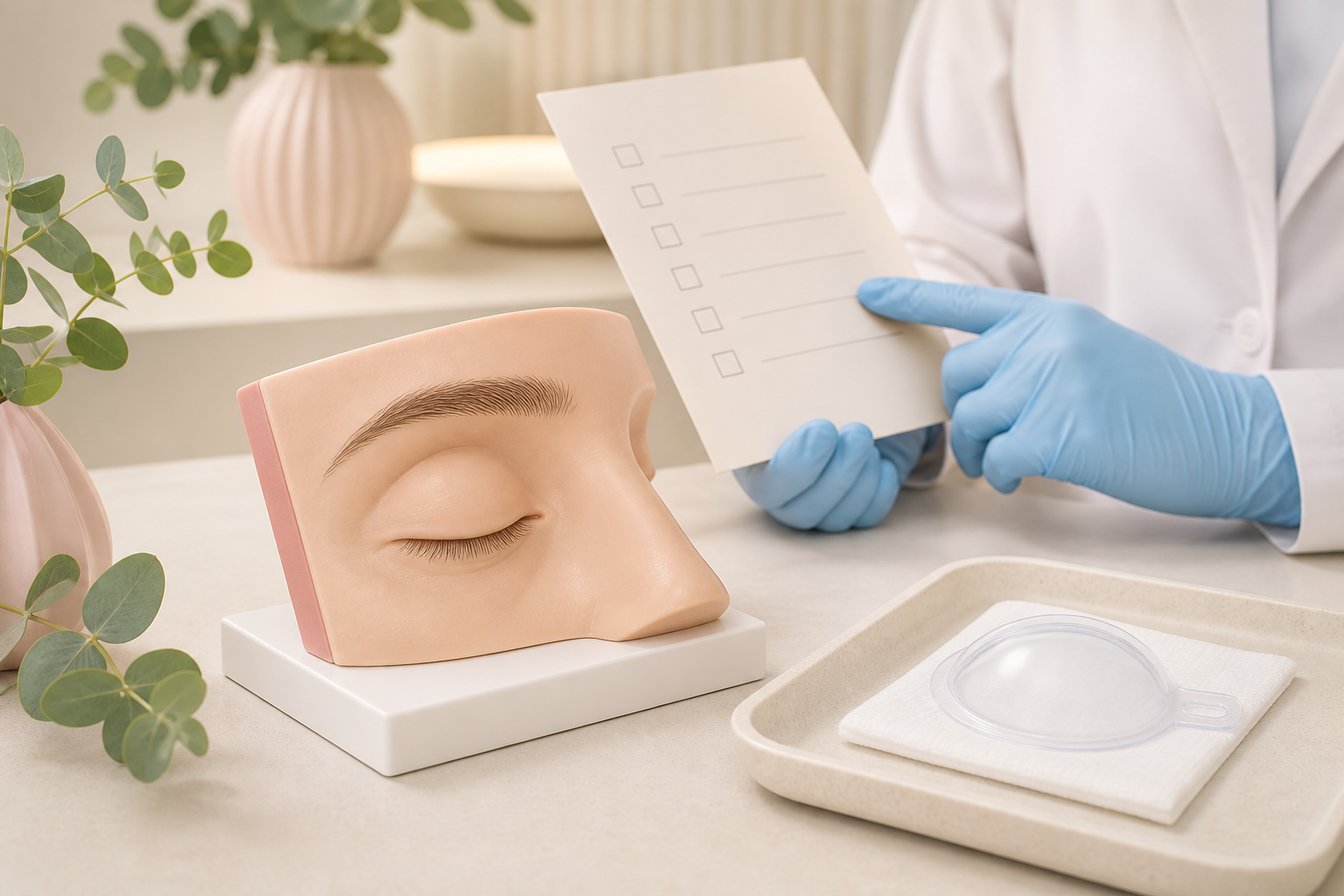
아이써마지처럼 써마지 고주파(RF) 에너지를 눈가나 눈꺼풀 부위에 사용하는 시술은 치료 범위에 맞는 안구 보호 절차가 필요합니다. 써마지 제조사의 안전 안내에 따르면 위·아래 눈꺼풀 또는 안와 가장자리 안쪽을 치료할 때는 금속이 아닌 플라스틱 안구 보호구(아이쉴드)를 사용해야 합니다. 금속 보호구는 고주파 에너지를 전달할 수 있어 사용하지 않습니다.
아이쉴드는 눈의 크기와 치료 범위에 맞춰 의료진이 선택하고 표준 절차에 따라 착용·제거해야 합니다. 환자가 직접 만지거나 빼서는 안 됩니다. 플라스틱 아이쉴드를 착용한 상태에서 눈 주변을 치료할 때는 진동 기능을 사용하지 않습니다. 진동으로 보호구의 위치가 어긋나면 각막 찰과상이나 안구 손상 위험이 커질 수 있기 때문입니다.
시술 전에 확인할 질문
- 실제 치료 범위가 눈썹뼈 바깥인지, 눈꺼풀과 가까운 부위인지
- 어떤 종류의 에너지를 사용하며 눈 보호는 어떻게 하는지
- 콘택트렌즈, 안구건조증, 녹내장, 망막질환, 안과 수술 이력을 알려야 하는지
- 시술 직후 예상되는 눈부심, 불편감과 즉시 진료가 필요한 증상은 무엇인지
과거 라식·라섹, 백내장 수술, 안구 외상 또는 현재 안과 치료 중인 질환이 있다면 상담 때 알립니다. 필요하면 시술 전 안과 확인이 우선될 수 있습니다.
시술 후 이런 증상은 기다리지 않습니다
눈 주변 시술 뒤 시야가 흐려지거나 일부가 가려 보이는 증상, 번쩍임이나 새로운 비문증, 심한 눈 통증, 눈부심, 동공 모양의 변화가 생기면 즉시 시술 기관에 알리고 안과 진료가 필요한지 확인해야 합니다. 갑작스러운 시력 저하는 응급 평가가 필요할 수 있습니다.
눈가 시술의 핵심은 ‘얼마나 가까이 치료하는가’만이 아닙니다. 해당 에너지에 맞는 보호 절차를 유지하고, 개인의 안과 병력을 반영하는 것이 먼저입니다.
자주 묻는 질문
보안경이 답답한데 잠깐 빼도 되나요?
환자가 임의로 벗어서는 안 됩니다. 치료 위치와 파장에 맞는 보호 방법은 의료진이 결정해야 합니다.
눈을 직접 치료하지 않는데도 안과 병력을 말해야 하나요?
눈과 가까운 부위라면 과거 수술과 현재 질환이 보호 방법과 치료 범위 판단에 도움이 될 수 있으므로 알리는 것이 좋습니다.
참고자료
이 글은 일반적인 건강 정보를 제공하며 개인의 진단이나 치료 계획을 대신하지 않습니다. 시술의 적합성과 구체적인 보호 방법은 건강 상태, 치료 부위, 사용 기기와 허가사항을 확인한 의료진과 결정해야 합니다. 한국에서 갑작스러운 시력 변화, 호흡 곤란, 의식 저하 또는 그 밖의 응급 증상이 발생하면 119에 연락하거나 즉시 응급 진료를 받으세요.
Closing your eyes may not be enough
The eye area is often treated for concerns such as pigmentation, fine lines and loss of firmness. Because it lies so close to the eye itself, the treatment field and the method of eye protection should be confirmed first. In particular, simply closing the eyes should not be assumed to provide complete protection during light- or laser-based procedures.
The effect of a laser on the eye depends on factors such as wavelength, energy, exposure time and distance. Protective eyewear therefore needs to match the device’s wavelength, while the treating clinician should select goggles or another eye-protection method appropriate to the exact area being treated. Patients should never remove protection on their own because it feels uncomfortable or obstructs access.
Why is an ocular shield used for Thermage around the eyes?
When Thermage radiofrequency (RF) energy is used around the eyes or on the eyelids, eye protection must match the treatment field. The manufacturer’s safety guidance specifies a non-metallic plastic ocular shield when treating the upper or lower eyelid or inside the orbital rim. A metal shield is not used because it may conduct RF energy.
The clinician should select a shield suited to the size of the eye and the planned treatment area, and insert and remove it according to the clinic’s standard procedure. Patients should not touch or remove it themselves. The vibration function is not used when treating around the eye with a plastic ocular shield in place: if vibration shifts the shield, the risk of corneal abrasion or other eye injury may increase.
Questions to ask before treatment
- Is the actual treatment field outside the brow bone, or close to the eyelid?
- What form of energy will be used, and how will my eyes be protected?
- Should I disclose contact-lens use, dry eye, glaucoma, retinal disease or previous eye surgery?
- What glare or discomfort may occur afterward, and which symptoms require immediate assessment?
Tell the clinician if you have had LASIK, LASEK, cataract surgery or an eye injury, or if you are currently receiving ophthalmic care. In some situations, an eye examination may need to come before the cosmetic procedure.
Do not wait if these symptoms appear
After a treatment near the eyes, promptly contact the treating clinic and ask whether urgent ophthalmic assessment is needed if you develop blurred or partly obscured vision, flashes, new floaters, severe eye pain, marked light sensitivity or a change in pupil shape. Sudden loss of vision may require emergency evaluation.
Safety is not only about how close the device comes to the eye. It begins with maintaining protection appropriate to the energy being used and incorporating your ophthalmic history into the treatment plan.
Frequently asked questions
The protective eyewear feels uncomfortable. Can I remove it briefly?
No. Patients should not remove protection on their own. The clinician must decide which protective method is appropriate for the wavelength and treatment location.
Do I need to mention my eye history if the eye itself is not being treated?
Yes. When treatment is close to the eye, previous surgery and current eye conditions can affect decisions about protection and the treatment field.
References
- American Academy of Ophthalmology EyeWiki: Ocular injuries due to cosmetic laser
- American Academy of Ophthalmology EyeWiki: Laser safety in ophthalmology
- Thermage professional safety information
This article provides general health information and is not a substitute for an individual diagnosis or treatment plan. Whether a procedure is suitable and how the eyes should be protected must be decided with a qualified clinician after reviewing your health, the treatment area and the authorised use of the relevant device. If you develop sudden vision changes, breathing difficulty, loss of consciousness or another emergency symptom while in Korea, call 119 or seek emergency care immediately.
目を閉じるだけでは十分でないことがあります
目元は、色素、細かいしわ、ハリなどの悩みで施術を検討することの多い部位です。一方で眼球に非常に近いため、実際の照射範囲と眼の保護方法を先に確認する必要があります。特に光やレーザーを用いる施術では、目を閉じるだけで眼球を完全に守れると考えてはいけません。
レーザーが眼に及ぼす影響は、波長、エネルギー、曝露時間、距離などによって異なります。そのため、使用する機器の波長に合った保護具が必要であり、施術部位に応じて医療者が適切な保護眼鏡や眼球保護具を選びます。邪魔に感じるからといって、患者さん自身の判断で外してはいけません。
アイサーマージで眼球保護具を使用するのはなぜですか?
アイサーマージのように、Thermageの高周波(RF)エネルギーを目元やまぶたに用いる施術では、治療範囲に応じた眼球保護が必要です。メーカーの安全情報では、上まぶた・下まぶた、または眼窩縁の内側を治療する際、金属ではないプラスチック製の眼球保護具(アイシールド)を使用するよう示されています。金属製の保護具はRFエネルギーを伝える可能性があるため使用しません。
眼球保護具は、眼の大きさと治療範囲に合わせて医療者が選び、院内の標準手順に従って装着・取り外しを行います。患者さんが触ったり、自分で外したりしてはいけません。プラスチック製の眼球保護具を装着して目の周囲を治療する際は、振動機能を使用しません。振動で保護具の位置がずれると、角膜擦過傷や眼球損傷のリスクが高まる可能性があるためです。
施術前に確認したい質問
- 実際の治療範囲は眉骨の外側か、まぶたに近い部位か
- どのようなエネルギーを使い、眼をどのように保護するか
- コンタクトレンズ、ドライアイ、緑内障、網膜疾患、眼科手術歴を伝える必要があるか
- 施術後に予想されるまぶしさや違和感と、すぐ受診すべき症状は何か
LASIK・LASEK、白内障手術、眼外傷の既往がある方、または現在眼科で治療中の病気がある方は、カウンセリング時に伝えてください。状況によっては、美容施術より先に眼科での確認が必要になることがあります。
施術後、次の症状は様子を見ないでください
目元の施術後に、かすんで見える、視野の一部が隠れる、光が走る、新たな飛蚊症、強い眼痛、強いまぶしさ、瞳孔の形の変化が生じた場合は、直ちに施術を受けた医療機関へ連絡し、緊急の眼科受診が必要か確認してください。急な視力低下は救急評価が必要なことがあります。
目元施術の安全性は、「眼にどれだけ近いか」だけで決まるものではありません。使用するエネルギーに合った保護手順を守り、個々の眼科既往を治療計画に反映することが先決です。
よくある質問
保護眼鏡が窮屈です。少しだけ外してもよいですか?
患者さん自身の判断で外してはいけません。波長と施術部位に合った保護方法は、医療者が決定します。
眼球そのものを治療しなくても、眼科の既往歴を伝える必要がありますか?
はい。眼に近い部位の施術では、過去の手術や現在の眼疾患が、保護方法や治療範囲を判断する材料になります。
参考資料
この記事は一般的な健康情報を提供するもので、個別の診断や治療計画に代わるものではありません。施術の適否と眼の保護方法は、健康状態、治療部位、使用機器の承認範囲を確認したうえで、資格を有する医療者と決定してください。韓国滞在中に突然の視力変化、呼吸困難、意識低下、その他の緊急症状が生じた場合は、119番へ連絡するか、直ちに救急診療を受けてください。
仅仅闭眼可能并不足够
眼周常因色素、细纹或松弛等问题而接受治疗,但这一部位离眼球非常近,因此应先确认实际治疗范围和眼部防护方式。尤其在使用光或激光的治疗中,不能认为闭上眼睛就能完全保护眼球。
激光对眼睛的影响会随波长、能量、暴露时间和距离等因素而变化。因此,防护用品必须与所用设备的波长相匹配,医生也应根据具体治疗位置选择合适的护目镜或其他眼部防护装置。即使觉得不舒服或妨碍操作,患者也不应自行取下。
眼周热玛吉为什么需要使用眼球保护罩?
像眼周热玛吉这样将Thermage射频(RF)能量用于眼周或眼睑的治疗,需要按照实际治疗范围采取相应的眼球防护。根据制造商的安全信息,在治疗上眼睑、下眼睑或眼眶缘内侧时,应使用非金属的塑料眼球保护罩(eye shield)。金属保护罩可能传导射频能量,因此不应使用。
保护罩应由医生根据眼睛大小和计划治疗范围选择,并按照医疗机构的标准流程放置和取出。患者不要自行触碰或取下。佩戴塑料眼球保护罩治疗眼周时,不使用振动功能;振动若使保护罩移位,可能增加角膜擦伤或其他眼部损伤的风险。
治疗前建议确认的问题
- 实际治疗范围是在眉骨外侧,还是靠近眼睑
- 将使用哪一种能量,眼睛会如何得到保护
- 是否需要告知隐形眼镜使用情况、干眼、青光眼、视网膜疾病或眼科手术史
- 治疗后可能出现哪些眩光或不适,哪些症状需要立即就医
如果做过LASIK、LASEK、白内障手术,曾有眼外伤,或目前正在接受眼科治疗,请在面诊时主动说明。必要时,可能需要先进行眼科评估,再决定是否接受美容治疗。
出现以下症状,不要等待观察
眼周治疗后,如果出现视物模糊、视野部分遮挡、闪光感、新出现的飞蚊、剧烈眼痛、明显畏光或瞳孔形状改变,请立即联系治疗机构,并确认是否需要紧急眼科评估。突发视力下降可能需要急诊处理。
眼周治疗的安全并不只取决于设备离眼睛有多近。更重要的是维持与所用能量相匹配的防护流程,并把个人眼科病史纳入治疗计划。
常见问题
护目镜戴着不舒服,可以暂时取下吗?
不可以自行取下。应由医生根据波长和治疗位置决定合适的防护方式。
不直接治疗眼球,也需要说明眼科病史吗?
需要。治疗部位靠近眼睛时,既往手术和当前眼病可能影响防护方式及治疗范围的判断。
参考资料
本文提供一般健康信息,不能替代个体化诊断或治疗方案。是否适合治疗以及具体的眼部防护方式,应由具备资质的医生在评估健康状况、治疗部位及相关设备的获批使用范围后共同决定。在韩国期间如出现突发视力变化、呼吸困难、意识丧失或其他紧急症状,请拨打119或立即前往急诊。
Fermer les yeux ne suffit pas toujours
Le contour de l’œil peut être traité pour des préoccupations telles que les taches pigmentaires, les ridules ou le relâchement. Comme cette zone se situe au contact de l’œil, il faut d’abord préciser le champ de traitement et la méthode de protection oculaire. Lors d’un soin utilisant de la lumière ou un laser, il ne faut pas supposer que le simple fait de fermer les yeux protège complètement le globe oculaire.
L’effet d’un laser sur l’œil dépend notamment de sa longueur d’onde, de l’énergie délivrée, du temps d’exposition et de la distance. La protection doit donc être adaptée à la longueur d’onde de l’appareil, et le médecin choisit des lunettes ou une autre protection en fonction de la zone exacte. Le patient ne doit jamais la retirer de sa propre initiative, même si elle paraît gênante.
Pourquoi utilise-t-on une coque oculaire avec Thermage autour des yeux ?
Lorsque l’énergie de radiofréquence (RF) Thermage est utilisée autour des yeux ou sur les paupières, la protection doit être adaptée à la zone traitée. Selon les informations de sécurité du fabricant, une coque oculaire en plastique non métallique est nécessaire pour traiter la paupière supérieure, la paupière inférieure ou l’intérieur du rebord orbitaire. Une coque métallique n’est pas utilisée, car elle peut conduire l’énergie RF.
Le médecin choisit une coque adaptée à la taille de l’œil et à la zone prévue, puis la met en place et la retire selon le protocole de l’établissement. Le patient ne doit ni la toucher ni l’enlever lui-même. La fonction de vibration n’est pas utilisée lors d’un traitement périoculaire avec une coque en plastique : si les vibrations déplacent la coque, le risque d’abrasion cornéenne ou d’autre lésion oculaire peut augmenter.
Questions à poser avant le traitement
- La zone traitée se situe-t-elle à l’extérieur de l’arcade sourcilière ou près de la paupière ?
- Quelle forme d’énergie sera utilisée et comment mes yeux seront-ils protégés ?
- Dois-je signaler le port de lentilles, une sécheresse oculaire, un glaucome, une maladie de la rétine ou une chirurgie oculaire antérieure ?
- Quels éblouissements ou gênes sont prévisibles, et quels symptômes nécessitent une évaluation immédiate ?
Signalez tout antécédent de LASIK, LASEK, chirurgie de la cataracte ou traumatisme oculaire, ainsi que tout suivi ophtalmologique en cours. Dans certaines situations, un examen ophtalmologique peut devoir précéder le soin esthétique.
N’attendez pas si ces symptômes apparaissent
Après un traitement près des yeux, contactez rapidement l’établissement et demandez si une évaluation ophtalmologique urgente est nécessaire en cas de vision floue ou partiellement masquée, d’éclairs lumineux, de nouveaux corps flottants, de douleur oculaire intense, de forte photophobie ou de modification de la forme de la pupille. Une baisse soudaine de la vision peut nécessiter une prise en charge en urgence.
La sécurité ne dépend pas seulement de la proximité entre l’appareil et l’œil. Elle commence par une protection adaptée à l’énergie utilisée et par la prise en compte de vos antécédents ophtalmologiques.
Questions fréquentes
La protection est inconfortable. Puis-je l’enlever quelques instants ?
Non. Le patient ne doit pas la retirer de sa propre initiative. Le médecin choisit la protection appropriée à la longueur d’onde et à la zone traitée.
Faut-il signaler mes antécédents ophtalmologiques si l’œil lui-même n’est pas traité ?
Oui. Lorsque le soin est réalisé près de l’œil, une ancienne chirurgie ou une maladie oculaire actuelle peut influencer le choix de la protection et du champ de traitement.
Références
- American Academy of Ophthalmology EyeWiki : lésions oculaires dues aux lasers esthétiques
- American Academy of Ophthalmology EyeWiki : sécurité des lasers en ophtalmologie
- Informations de sécurité Thermage destinées aux professionnels
Cet article fournit des informations générales sur la santé et ne remplace ni un diagnostic ni un plan de traitement individuel. L’indication du soin et la méthode de protection des yeux doivent être décidées avec un professionnel qualifié après examen de votre état de santé, de la zone traitée et des usages autorisés de l’appareil. En Corée, en cas de baisse soudaine de la vision, de difficulté respiratoire, de perte de connaissance ou de tout autre symptôme urgent, appelez le 119 ou consultez immédiatement un service d’urgence.
Cerrar los ojos puede no ser suficiente
El contorno de ojos suele tratarse por cuestiones como manchas, líneas finas o pérdida de firmeza. Al estar tan cerca del globo ocular, conviene confirmar primero el área exacta de tratamiento y el método de protección. En especial, durante procedimientos con luz o láser no debe darse por hecho que cerrar los ojos ofrece una protección completa.
El efecto de un láser sobre el ojo depende de factores como la longitud de onda, la energía, el tiempo de exposición y la distancia. Por eso, la protección debe corresponder a la longitud de onda del equipo, y el médico debe elegir gafas u otro dispositivo apropiado para la zona concreta. El paciente no debe retirarlo por su cuenta, aunque resulte incómodo o parezca dificultar el acceso.
¿Por qué se utiliza un protector ocular con Thermage alrededor de los ojos?
Cuando se aplica energía de radiofrecuencia (RF) Thermage alrededor de los ojos o sobre los párpados, la protección debe ajustarse al campo tratado. Según la información de seguridad del fabricante, al tratar el párpado superior, el inferior o la zona situada dentro del reborde orbitario debe utilizarse un protector ocular de plástico no metálico. No se usa uno metálico porque puede conducir la energía de RF.
El médico selecciona un protector adecuado al tamaño del ojo y al área prevista, y lo coloca y retira siguiendo el protocolo del centro. El paciente no debe tocarlo ni extraerlo por sí mismo. La función de vibración no se utiliza al tratar la zona periocular con un protector de plástico colocado: si la vibración lo desplaza, puede aumentar el riesgo de abrasión corneal u otra lesión ocular.
Preguntas que conviene hacer antes del tratamiento
- ¿El área real de tratamiento queda fuera del arco de la ceja o está cerca del párpado?
- ¿Qué tipo de energía se utilizará y cómo se protegerán mis ojos?
- ¿Debo informar del uso de lentes de contacto, ojo seco, glaucoma, enfermedad de la retina o cirugía ocular previa?
- ¿Qué deslumbramiento o molestias pueden aparecer y qué síntomas requieren valoración inmediata?
Comunique si se ha sometido a LASIK, LASEK o cirugía de cataratas, si ha sufrido una lesión ocular o si recibe atención oftalmológica en la actualidad. En algunas situaciones puede ser prioritario realizar una revisión oftalmológica antes del procedimiento estético.
No espere si aparecen estos síntomas
Después de un tratamiento cerca de los ojos, contacte de inmediato con el centro y pregunte si necesita una valoración oftalmológica urgente si presenta visión borrosa o parcialmente tapada, destellos, nuevas moscas volantes, dolor ocular intenso, fotofobia marcada o cambios en la forma de la pupila. Una pérdida repentina de visión puede requerir atención de urgencia.
La seguridad no depende solo de cuánto se acerque el equipo al ojo. Empieza por mantener una protección adecuada para la energía utilizada e incorporar los antecedentes oftalmológicos al plan.
Preguntas frecuentes
La protección me resulta incómoda. ¿Puedo quitármela un momento?
No debe retirarla por su cuenta. El médico decide qué método es adecuado para la longitud de onda y la zona tratada.
¿Debo mencionar mis antecedentes oculares aunque no se trate directamente el ojo?
Sí. Cuando el procedimiento se realiza cerca del ojo, una cirugía previa o una enfermedad ocular actual puede influir en la protección y en la delimitación del área de tratamiento.
Referencias
- American Academy of Ophthalmology EyeWiki: lesiones oculares por láseres estéticos
- American Academy of Ophthalmology EyeWiki: seguridad del láser en oftalmología
- Información de seguridad de Thermage para profesionales
Este artículo ofrece información general de salud y no sustituye un diagnóstico ni un plan de tratamiento individual. La idoneidad del procedimiento y la forma de proteger los ojos deben decidirse con un profesional cualificado tras revisar el estado de salud, la zona tratada y los usos autorizados del equipo. Si durante su estancia en Corea presenta cambios repentinos de visión, dificultad para respirar, pérdida de conocimiento u otro síntoma de urgencia, llame al 119 o acuda de inmediato a un servicio de urgencias.